
A Forest rich in biodiversity, heritage and culture
Epping Forest has probably been open heathland and woodland since trees returned after the last Ice Age, over 10,000 years ago. It is considered to be ‘ancient woodland’, but has been affected by human practices since early times. Once ancient wood pasture, common land largely cut for firewood, and hunting grounds of kings, it became a Royal Forest in the early 12th century under Henry I. Some common rights remain today, all of which came under the control of the City of London Corporation, who are the Conservators of Epping Forest, after the passing of the Epping Forest Act in 1878.
Ancient lopping practices shaped the Forest as we see today
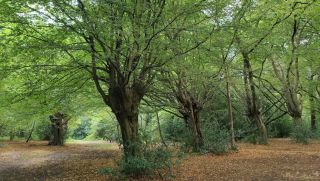
Epping Forest’s trees have been shaped by local people for hundreds of years, lopping them for fuel and building material. ‘Coppicing’ and ‘pollarding’ are common types of lopping practices, involving cutting tree branches every 12 to 18 years allowing the trees to regrow and ensuring a sustainable supply of wood. This shaped the Forest as we see today and influenced its management. Today, Epping Forest is home to approximately 55,000 ancient trees, more than any other single site in the country. 85% of the UK’s veteran beech pollards are found here in Epping Forest. Find out more here.
Retreats, lodges, and shelters: recreation in Epping Forest
From royal lodges for viewing and supporting the hunt, to barns serving teas to day-trippers and shelters to nourish the wildlife in harsh winters, the architecture of Epping Forest blossomed as its predominant use moved away from grazing and lopping towards recreation and leisure. Some of the popular destinations including the Queen Elizabeth’s Hunting Lodge, and Butler’s Retreat. Find out more here.

Saving Epping Forest and the passing of Epping Forest Act 1878
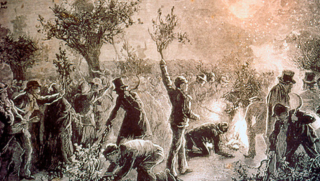
As London grew in the 1860s and 1870s, private landowners tried to take parts of Epping Forest for their own use, breaching local people’s grazing and lopping rights, by enclosing parts of the Forest with fences. At the same time, ordinary Londoners highly valued the Forest as a place to get away from their working lives. Tensions grew, with large rallies taking place, notably on Wanstead Flats, to protect open access to the Forest. Find out more here.
With growing public concern about enclosures, the City of London Corporation, which had grazing rights as a local landowner, took legal action against the landowners. This led to the Epping Forest Act of 1878, naming the City of London Corporation as Conservator of the Forest. The Act guaranteed open access to the Forest making Epping Forest the earliest protected open green space in the country. This predated the establishment of the National Parks by over 70 years. The City of London Corporation owns and manages the Forest to this day.
Fight against motorway planning in the 1970s and the Bell Common Tunnel
In the 1960/1970s, Epping Forest faced threats when the Orbintal Motorway (M25, then called M16) where to be built through Upshire Village and across Bell Common. Local people come toghether and formed the Alliance Against M16, consisted of Upshire Village Preservation Society and Friends of Epping Forest (our predecessor organisation), together with the Epping and Theydon Bois Societies, marched from the Forest to the Houses of Parliament to deliver their petition. Followed by years of inquiries and consultations, the result was the Bell Common Tunnel, so that the M25 is underground rather than cut through Epping Forest. Find out more here.

Epping Foest Heritage for All
Thanks to the funding support from The National Lottery Heritage Fund, ‘Epping Forest Heritage for All’ is three-year project aims to inspire people from all backgrounds with the rich heritage of the Forest, foster a greater sense of belonging to the Forest community, and a shared feeling that the heritage of the Forest is for all to enjoy, celebrate and protect now and for generations to come. Find out more.

Discover Epping Forest

Download our Walks App
Download our free GPS-enabled walking app that offers 20 fantastic trails throughout the Forest and its bufferland, including 10 official waymarked trails by City of London Corporation and the Epping Forest Big Walk. Learn more here.

Join our guided walks
See Epping Forest in a new light with our guided forest walks! Led by forest experts, our guided walks offer the chance to learn more about the flora and fauna of the forest as well as Epping Forest’s historical roots. A great way to get outside and meet new people! Learn more here.