
In 1878, the Epping Forest Act was passed. The result of fierce campaigning by local communities, alongside the work of the early campaigners for open spaces and the City of London Corporation, the Act forever protects Forest land from development and forever secures public right of access. Since the Act, Epping Forest has embodied the power of communities thinking to their future and what they want out of it. As we draw closer to the 150th anniversary of the Act in 2028, the Forest — as a running route, a good spot to walk the dog, catch up with friends and family, or a space for quiet contemplation — continues to play a significant role in the lives of its 7 million annual visitors.
The Forest also continues to inspire people. Throughout history, writers, poets and artists have been drawn to the Forest’s beauty and heritage. More recently, participants of our “Heritage for All” project, a three-year project to engage a significantly more diverse range of people and community groups in the Forest, have testified to the impact the Forest has had on them.
“It was nice to learn more about the efforts that people have put into fighting the privatisation of the land. I am a teacher, and brought it up in class the next day, when we had a relevant discussion about land and ownership!”
— Pippa
“It was really interesting to learn about how the Forest has been integrated in the lives of previous generations and the different ways they benefited from and lived with the space. […] I felt inspired to learn about early conservation efforts and environmental activism from those involved in and passionate about protecting the Forest”
— Black Girls Hike member
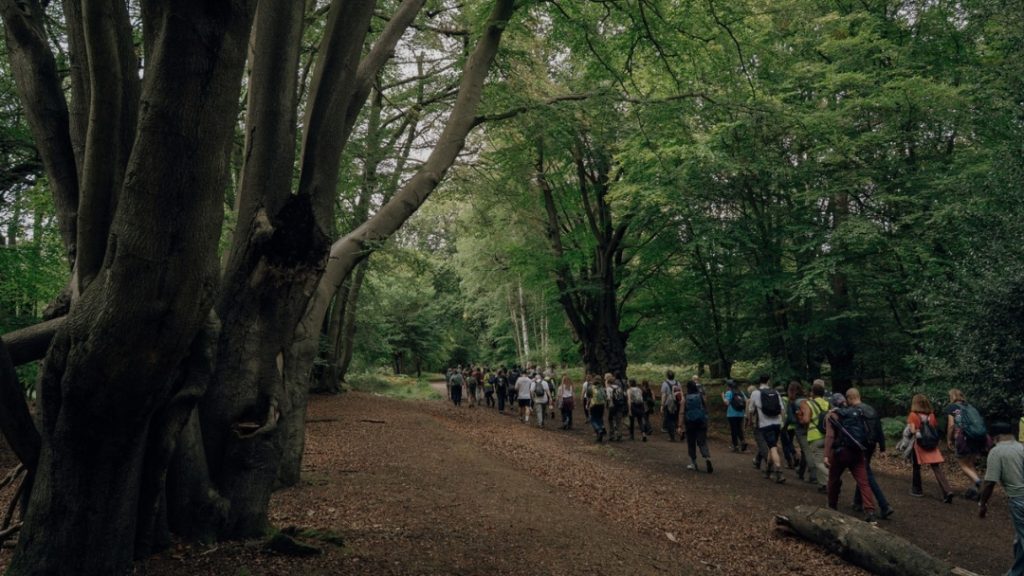
Participants walk among ancient trees as part of the Epping Foerst Big Walk 2026. Photo by Yu Leng.
A Vision for the Forest as a way of looking to the future
The Epping Forest’s continuing importance is set against an uncertain future. The Forest is facing its biggest challenges in a generation, from the climate change impacts of increased temperatures, stronger winds and rainfall, from the wider biodiversity crisis, from the scale of ever-increasing adjacent development and the likelihood of many more visitors each year.
Accompanying these will be changes that impact communities themselves. New technologies and changes in the economy are affecting work practices. Thinktanks have long been speculating about the impacts of an ageing population. Furthermore, ways people approach social life are changing and will continue to. Epping Forest has always been a major social hub (in 1882, 50,000 visitors were recorded as having visited Wanstead Flats Fair on Easter Monday). It remains to be seen how this role will be change as time goes on. Crucially, all these ecological and social futures, made within a constantly changing world, continue to be felt and understood.
Nevertheless, we believe that, by thinking through the myriad ways in which people see, understand and are inspired by the Forest, we can provide space for imagining the Forest and its role in the future.
Therefore, ahead of the 150th anniversary of the Act, we want to engage the local communities around Epping Forest in a variety of ways, to capture their views of how they envision the Forest in the year 2078, the Act’s 200th anniversary. How would different people want the Forest to look in 50 years? How would different people imagine their own future experiences of the Forest? Or those of their children or grandchildren?
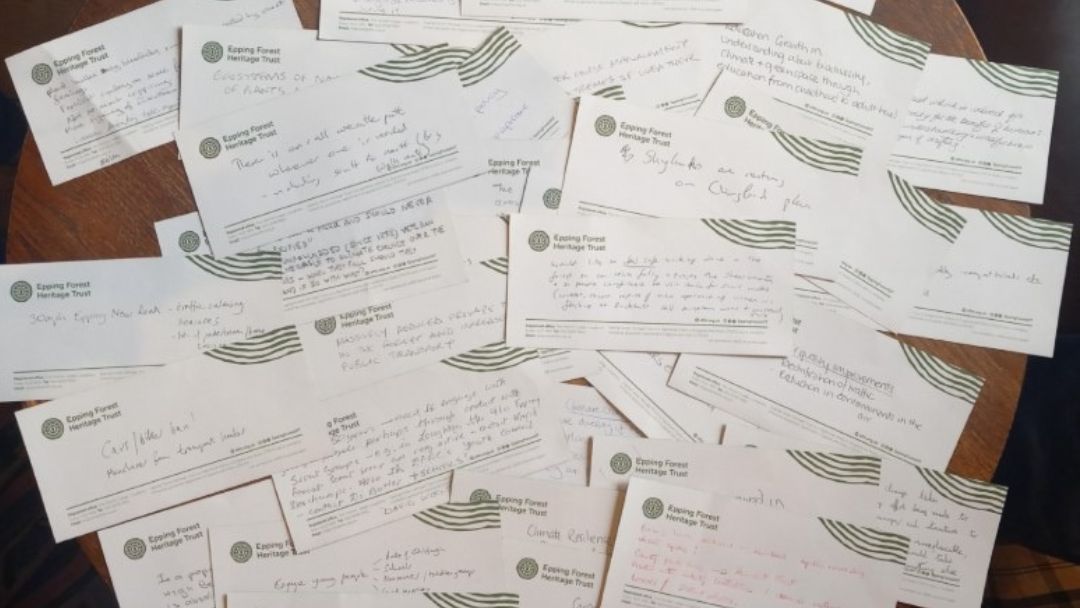
Initial reflections on the future of the Forest from our members
How we will piece together a vision for the Forest
Fore-fronting communities from the get-go
We plan to run surveys, workshops and other in-person events to help support imaginative thinking about the Forest’s future. This will then lead to a report, showcasing this imaginative thinking, balancing scenarios and viewpoints, and suggesting communally desired propositions and a vision for the future of the Forest and its communities.
But first, we want to make sure that how we go about designing these is community-led.
At our November 2026 AGM, we held a 30-minute session for blue-sky thinking about the project, getting our members to respond to the question: “what is your vision for the Forest over the next 50 years“. Approaches ranged from sharing concerns about biodiversity loss, and hopes for its recovery, to issues around visitor management, road speed, and sense of safety and belonging in the Forest. This insight will help build up the kinds of questions we will ask and conversations we will be facilitating in the coming year.
Forest governance – how local people are involved in decision-making processes – also routinely popped up as a key issue. Hearing this, we’re seeking to engage as many local groups, both within Epping Forest and within the Forest’s much wider, historic boundary, in our upcoming engagement work.
We’re keeping open the door for this blue sky thinking, with anyone interested able to share initial thoughts and priorities about the future of the Forest, please email us at: admin@efht.org.uk
Drawing on past work
To help inform our upcoming engagement work we will look to and share insight from people specialist in doing future thinking. Projects like the Centre for London’s “London Futures Review” show ways of letting communities’ priorities shine amidst uncertain futures. The “Future Forest: The Black Wood of Rannoch” project applies a future thinking approach to an ancient Caledonian pine forest, and evidences how communities can help identify and promote a range of priorities around an ancient open space. And National Gallery Scotland and National Library of Scotland’s “Preserving Pasts | Imagining Futures” project showcases the value of creative practices for imaginative exercises.
Building up the Vision
Anchoring our project in this past work, and the views of our members, will ensure that the range of ways we’ll engage in this work will remain diverse. We will be conducting…
- A survey, sent to members, supporters, the general public and local green space organisations around the historic boundary of Epping Forest
- Art and creative workshops
- Roundtable discussions with our People’s Forest Panel and other key stakeholders.
How can you get involved?
Up through January 2027, there is still a chance to shape the strategy for the project through sharing your thoughts and vision. Contribute your thoughts by emailing us at: admin@efht.org.uk
If you would like to play even more of a part in shaping and delivering the project, get in touch with us about volunteering opportunities.
The survey and events will start being held from late winter/early spring 2027, so keep an ear to the ground!
Find out more
To find out more about the People’s Vision for the People’s Forest project, please visit our website here.